 Court Clerk Alicia Donahue |
Court Clerk Alicia Donahue: General Court Function and Information.
Red Bank Municipal Court Employees Judge: Honorable Johnny Houston Court Clerk: Alicia Bull Donahue Deputy Court Clerk: Alley Hindmon Special Assistant: Christian Byrd Our mission is to deliver fair and accessible justice for all, ensuring equal treatment under the law. We strive to protect rights with compassion, operate with integrity, and exceed community expectations through exceptional service. By supporting the judiciary and upholding the Constitution of the United States of America and the State of Tennessee, we strive to maintain the highest standards of accuracy and excellence in all our endeavors. General Court Function and Information The general function of court clerks involves administrative, clerical, and technical duties, as outlined in the general statement of duties. Some of these general duties include maintaining all court records, assisting the Judge and Prosecutor, and preparing court dockets and litigation tax reports for the State of Tennessee. The voters of the City elect a City Judge for a term of eight (8) years. The Judge tries all persons charged with violating the city's ordinances. He has the power to levy fines, penalties, and forfeitures in accordance with the offense and to impose court costs established by ordinance. He is also charged with issuing all necessary process papers, administering oaths, and penalizing for contempt. A few cities in Tennessee have concurrent General Sessions jurisdiction. These cities have similar authority to a county general sessions court, while also exercising municipal court jurisdiction. This means that the Red Bank Municipal Court has authority over all infractions of municipal ordinances of the City of Red Bank and concurrent jurisdiction with courts of general sessions in all cases of criminal violations committed within the City, including the jurisdiction to conduct misdemeanor trials, felony and misdemeanor preliminary trials and bind over defendants to the grand jury for indictment. Office Hours Monday-Thursday 8:30 am - 5:30 pm Friday 8:30 am – 5:30 pm Closed on most national holidays. 423-874-0055 Helpful Information about the court process Court is every Monday, except for most National holidays. It begins at 1:30 with the traffic docket, then moves into the criminal docket starting at 2:00. We advise you to arrive about 15 minutes early with all the documentation you need for your court appearance. We ask that you arrange childcare for small children; do not bring them to court with you. Weapons, food, and drinks are prohibited and will either be taken at the security check, or you will be asked to take them to your vehicle. All juveniles must be accompanied by a parent or guardian for their case. Please wear proper clothing for court. Dressing inappropriately for court will result in you being asked to leave the courtroom and having to return to court dressed in suitable clothing. The rules and dress code are posted on our website. One of the things we see often is people being afraid to call if they are not able to make their court appearance or pay their fines. We will work with anyone needing assistance with either of these. Fines and costs are part of your case and must be paid. Payment plans are an option if you are not able to pay in full on the day of court. Failure to pay or appear in court on your review date can result in suspension of your driver’s license or a failure to appear warrant being issued for your arrest. We would rather reschedule your court date than issue a warrant for failing to appear in court. We do ask that you call before your court date to reschedule because we do not usually answer phones after noon on court days due to preparing for and handling court obligations. If you do miss court or think you have missed court, please do not hesitate to call the clerk’s office. We’d prefer to reschedule rather than risk you facing another arrest for failing to appear on you’re your court date. However, if you have not completed all classes or public workdays required, you will need to appear in court that day to ask the Judge for an extension. Our office, along with Judge Houston, understands that court can be a scary experience for some people, especially those who have never been to court, but we are here to assist you when we can. Resources in the community There are several resources in our area for multiple needs. We have organizations for victims and families, substance and alcohol abuse, as well as mental health. Several of these resources are listed on our website here. These organizations are available for everyone, not just those who are involved in the court system. Remember, it is essential to appear in court, whether you are a defendant or a victim/witness. _________________________________________________________________________________________
|
|
|
|
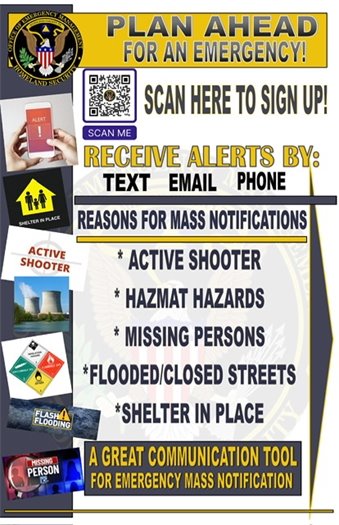
SIGN UP TO RECEIVE HAMILTON COUNTY RESIDENT EMERGENCY NOTIFICATIONS. The information will be used by Hamilton County Office of Emergency Management officials ONLY! This is a secured site, and the data registered will be used for emergency notifications only. Receive SMS, email and voice alerts.
|
|
|
|
|
|
BE READY Natural disasters such as flood, fire, earthquake, tornado and windstorm affect thousands of people every year. You should know what your risks are and prepare to protect yourself, your family and community. Recognizing an impending hazard and knowing what to do to protect yourself and your family will help you take effective steps to prepare beforehand and aid recovery after the event. Some of the things you can do to prepare for the unexpected, such as assembling a supply kit and developing a family emergency plan, are the same for all types of hazards. However each emergency is unique and knowing the actions to take for each threat will impact the specific decisions and preparations you make. By learning about these specific threats, you are preparing yourself to react in an emergency. For more information visit the link: BE READY | community-prep. _________________________________________________________________________________________ |
|
|
|
Red Bank Police Department: Back to School Bus Safety Reminder.
As the new school year begins, drivers are reminded to stay alert and follow all school bus safety laws to help protect our children.
|
|
|
|
|
|
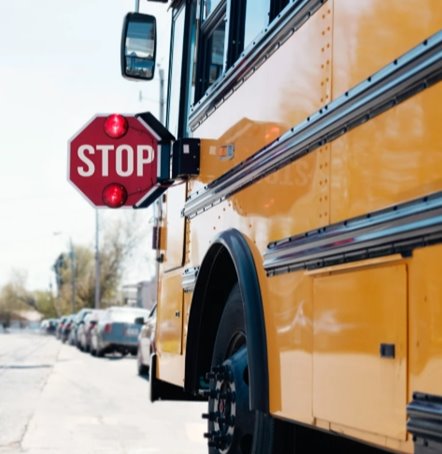
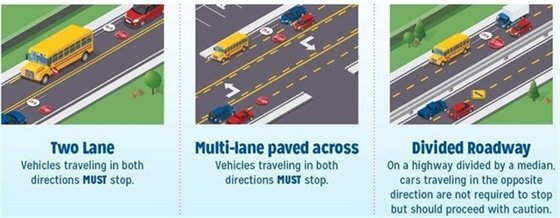
When a school bus stops and activates its flashing red lights and stop sign, drivers must stop—it’s not just courtesy, it’s the law. In Tennessee: - Two-lane roads: Traffic in both directions must stop.
- Multi-lane roads without a median: All traffic must stop.
- Roads with a median or physical barrier: Only traffic following the bus must stop
|
|
|
|
|
|
Drivers must come to a complete stop and must not move again until the bus resumes motion, the bus driver signals it’s safe, or the bus’s warning lights and stop sign are retracted. Failure to comply with this state law (TCA 55-8-151) carries steep consequences: a Class A misdemeanor (minimum $250 fine), escalating with each repeat offense, and felony charges if injuries or death occur. Never attempt to pass a stopped school bus. Children may be crossing the road unexpectedly, and their safety depends on your attention and patience. Let’s work together to ensure a safe and successful school year! __________________________________________________________________________________________ |
|
|
|
Drive Sober or Get Pulled Over: Let's Work Together to End Drunk Driving.
Red Bank, Tennessee — From August 15 through September 1, the U.S. Department of Transportation’s National Highway Traffic Safety Administration (NHTSA) will be working alongside local law enforcement for the Drive Sober or Get Pulled Over high-visibility enforcement campaign. The goal is to deter impaired driving and prevent the tragedies seen during previous Labor Day weekends from happening again. During the 2023 Labor Day holiday (6 p.m. September 1 – 5:59 a.m. September 5), there were 511 traffic crash fatalities nationwide. Of these 511 fatalities, 36% (185) involved a drunk driver. Sixty-eight percent of the impaired drivers killed had a blood alcohol concentration (BAC) of .15 or higher. Among drivers between the ages of 18 and 34 who were killed in crashes over the Labor Day holiday in 2023, 45% of those drivers were drunk, with BACs of .08 or higher. “We want our community members to understand it’s our priority to keep people safe, so we’re asking everyone to plan ahead if they know they’ll be out drinking,” said Sgt. Rusty Aalberg. “The Drive Sober or Get Pulled Over campaign is an awareness effort to get the message out that drunk driving is illegal and it kills. Let’s make this a partnership between law enforcement and drivers: Help us protect the community and put an end to this dangerous behavior.” Drivers should be safe during this Labor Day holiday weekend by planning ahead if they intend to drink. They shouldn’t wait until after drinking to plan how to get somewhere. Impairment clouds a person’s judgment. Drivers should secure a designated sober driver or call a taxi or rideshare for a sober ride home. If a driver finds they are unable to drive, they should give their keys to a sober driver so that person can get them home safely. When a friend has been drinking and is considering driving, friends should be proactive — take away the keys and help them get a sober ride home. If anyone spots a drunk driver, contact local law enforcement. For more information on impaired driving, visit www.nhtsa.gov/risky-driving/drunk-driving. _________________________________________________________________________________________
|
|
|
|
|
|
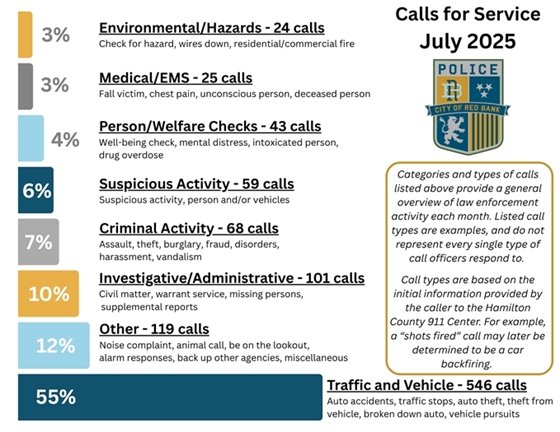
New Monthly Update: Police Department Calls for Service Report Starting this month, the Red Bank Police Department will be sharing a monthly breakdown of calls for service. These reports are designed to give residents a better understanding of how our officers are serving and protecting the community every day. Calls for service refer to incidents where police response is requested- when people call 911 for emergencies, or the non-emergency dispatch line at 423-877-2481. The Hamilton County 911 Center provides dispatch services for Red Bank. From traffic stops to emergency responses, welfare checks to criminal investigations- Red Bank officers respond to a wide variety of calls throughout the month. This report will highlight the types and volume of calls we handle, providing insight into the work being done behind the scenes to keep our city safe. Our goal is to keep you informed, engaged, and aware of the service your police department provides. Thank you for your continued support, Red Bank! _________________________________________________________________________________________ |
|
|
|
|
|
Beginning the evening of July 28, the Tennessee Department of Transportation (TDOT) will initiate a multi-week repaving and restriping project along State Route 8, stretching from Market Street in Chattanooga to Signal Mountain Road in Red Bank. This work is designed to enhance mobility and safety for all roadway users—including motorists, cyclists, and pedestrians. ________________________________________ Key Features of the Project: • Lane Reconfigurations: Travel lanes will be reduced along sections of the corridor to promote safer driving speeds and allocate space more effectively. • New Bicycle Lanes: Dedicated bike lanes will be added, supporting TDOT’s and the City of Red Bank’s commitment to Multimodal infrastructure (a key 2025 Red Bank City Commission Goal) and offering safer routes for cyclists. • Enhanced Pedestrian Areas: Where sidewalks are currently lacking, the new striping patterns will provide open buffer zones that increase pedestrian safety and visibility. ________________________________________ Public Information Resources: Residents and commuters are encouraged to stay informed through the following channels: • Watch a detailed project overview by Red Bank City Planner Michael Pham, available on the City of Red Bank TN Facebook Page from July 16th. • Search YouTube for the City of Red Bank’s coverage to view updates and learn more about expected changes. ________________________________________ What Drivers Should Expect: • Temporary Delays during the resurfacing phase. • Lane adjustments once the new striping is applied. • Re-acclimation Period for motorists adapting to updated traffic flows and lane configurations. TDOT and the City of Red Bank appreciate the public’s patience and cooperation. With a little time—and a few timing tweaks—smooth, safe travel through the corridor will be restored and enhanced for years to come. _______________________________________________________________________________________ |
|
|
|
Public Works: Municipal Safety Matters. Pavement Markings- The Unseen Traffic Guardians.
In FY-2025 the City of Red Bank Public Works Department began a continuing campaign to maintain fresh striping of all city roads. This will be completed through various processes such as direct contracting for secondary roads and as part of a repaving campaign using MPO (Metropolitan Planning Organization) funds for roads that are classified as arterials and collectors. This latter process will begin to take place in FY-27 through FY-29 using approved funding. With paving in mind, let’s turn our thoughts to pavement markings and just exactly what do they mean to vehicle drives as well as other modes of transportation?
|
|
|
|
The Language Beneath Our Tires: Understanding Pavement Markings Every time you navigate public roads, you're reading a silent yet vital language—pavement markings. From solid lines to stop bars, these markings orchestrate road safety and driver behavior more than most realize. They aren’t mere paint; they’re regulatory tools governed by federal guidance, crafted for clarity, and deployed with strategic purpose. Solid vs. Dashed: Lane Discipline According to FHWA According to the Federal Highway Administration (FHWA), pavement lines are more than aesthetic—they're instructional. - Solid Lines indicate do not cross areas. They are typically deployed where lane changes could present safety hazards, such as on curves, near intersections, or approaching pedestrian zones. One example of this is at Dayton Boulevard and Morrison Springs Road where cars take the westbound slip lane and immediately cross the solid white line to sit in a lane with a double yellow line or cross into oncoming traffic into the opposing lane to turn into the Food City parking lot.
- Dashed Lines grant permission to change lanes—but only when it's safe and appropriate. Examples of this are on Dayton Boulevard and Morrison Springs Road after passing the solid white lines and where the center turn lane has one solid yellow line backed up with dashed yellow line meaning it is appropriate to turn into the turn lane. The area mentioned in the previous bullet comment at Morrison Springs Road and the Food City entrance is a motor vehicle violation to cross the double yellow line to turn into Food City. The alternative is to continue south on Dayton Boulevard and take the Food City parking lot entrance near Firehouse Subs.
This visual protocol ensures a uniform experience across state and municipal boundaries, promoting driver compliance through consistency. Notably, FHWA’s Manual on Uniform Traffic Control Devices (MUTCD) serves as the national standard for line placement and design. The Power of the Stop Bar Positioned strategically just before intersections, stop bars are thick transverse lines—usually white—measuring approximately 12 to 24 inches wide. Their intent is simple but critical: - They indicate where vehicles must stop in response to a traffic signal, sign, or law enforcement instruction.
- They prevent encroachment into pedestrian crosswalks or intersection clearance zones. A good example of this is at the Dayton Boulevard/Morrison Springs Road and Dayton Boulevard/Ashland Terrace intersections. It is typical to see drivers pull all the way down and partially block the pedestrian crosswalk at either of these locations.
- Correctly positioned and correctly utilized Stop Bars preserve sightlines, ensuring safe turns and visibility for all road users, including bicycles and walkers.
Emplacement Considerations: - Stop Bars are typically installed via thermoplastic materials or high-durability epoxy, engineered to withstand high traffic volumes and harsh weather.
- Placement is guided by MUTCD and adjusted to intersection geometry, crosswalk location, and signal timing requirements.
Why It Matters for Municipal Safety Pavement markings serve as the frontline of passive traffic regulation. Unlike signs or signals, they do not require electrical infrastructure or active enforcement—and yet they dramatically shape behavior. Municipalities that invest in proper marking maintenance benefit from: - Reduced collisions and road departure incidents
- Improved pedestrian protection
- Greater trust and comprehension among drivers
And when coupled with community outreach—such as public info briefs or visual campaigns—these markings become intuitive guides for civic responsibility and safe mobility. When Lines Disappear: Why Some Roads Go Unstriped Not every public roadway receives pavement markings—and that’s often by design. On secondary or low-volume roads, particularly in rural or residential zones, several factors may render center line striping impractical or noncompliant with national standards: - Insufficient Roadway Width: According to MUTCD guidance, center lines are typically recommended for roads with widths greater than 16 feet. Roads narrower than this do not provide safe separation for opposing traffic lanes, making striping potentially misleading.
- Traffic Volume Thresholds: FHWA recommends striping only on roads with higher daily traffic counts. For example, a center line is generally required when average daily traffic (ADT) exceeds 6,000 vehicles per day. Below that threshold, especially on access roads or local streets, center lines may not improve safety outcomes enough to justify cost or maintenance.
- Environmental and Terrain Constraints: In hilly or winding areas, narrow shoulders and abrupt curves can make uniform striping physically impossible. These roads often rely on edge lines or signage to guide drivers instead.
- Maintenance Limitations: Small municipalities may prioritize markings based on critical need and available funding. Striping a low-volume, secondary road may rank lower in terms of safety impact per dollar spent, compared to intersections or high-speed corridors.
Rather than being a sign of oversight, the absence of center lines reflects purposeful engineering decisions aligned with federal guidance and local context. That’s the essence of practical governance—ensuring that every line painted on the road serves a real and measured purpose. Final Thought Next time you're stopped at a white bar or hesitating before a solid line, remember, these aren’t just rules—they’re representations of thoughtful engineering, municipal planning, and FHWA-backed policy. They speak the language of safety, and every driver benefits when we all learn to read it. _____________________________________________________________________________________________
|
|
|
|
Red Bank Fire Department: Hot Cars
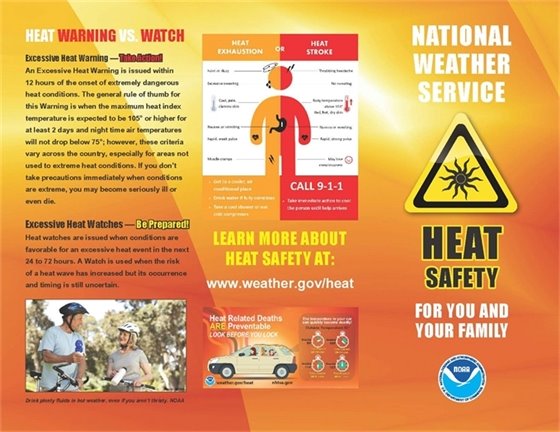
Over the past 25 years, more than 950 children have died of heatstroke, because they were left or became trapped in a hot car. It is important for everyone to understand that children are more vulnerable to heatstroke and that all hot car deaths are preventable. Know the Facts • A child's body temperature rises three to five times faster than an adult. When a child is left in a vehicle, that child's temperature can rise quickly — and the situation can quickly become dangerous. • Heatstroke begins when the core body temperature reaches about 104 degrees. • A child can die when their body temperature reaches 107 degrees. • In 2022, 33 children died of heatstroke in vehicles. • In 2018 and 2019, we saw a record number of hot car deaths — 53 children died each year— the most in at least 25 years. Pediatric Vehicular Heatstroke (PVH) is one of the leading causes of non-crash-related fatalities among children under the age of 15. It occurs when a child is left in a hot vehicle. Sleeping babies under the age of 2 are the most frequent victims, making them more susceptible to heatstroke than adults. Many people these days are working on autopilot. Unfortunately, even great parents (or caregivers) can forget a child in the back seat when they are tired, distracted, stressed, or if their routine is disrupted. Take extra precautions to prevent a needless tragedy from happening. LOOK before you lock!! 1. Always check the back seat before you lock the car and then walk away. Make it a habit. 2. Keep a reminder such as a stuffed animal in your child’s car seat when it’s empty and move it to the front seat as a visual reminder when your child is in the back seat. 3. Leave an essential item such as a purse, cell phone, jacket, or your left shoe in the back seat with your child to be sure you check the back seat. 4. Avoid distractions while driving, especially cell phone use. 5. Set a reminder alarm on your phone or calendar. Make sure the tune is different from other alarms on your phone. 6. Consider buying a vehicle with technology to remind you to check the back seat. PETS!! Pets are also at risk of overheating when left in a vehicle. Dogs are not good at regulating their body temperature. They sweat through their paws, so the only way they can keep cool is by panting. High temperatures can cause irreparable organ damage and even death. If you want to take your pet: • Go through the drive-thru instead of going inside the restaurant or store. • Go to pet-friendly stories where your dog is welcome to browse with you. • Eat at an outdoor café where your dog can sit with you. • Bring a friend who can play with your dog outside while you run your errands. Or leave your dog at home where it is cool and safe. Please consider all of these safety tips and enjoy these DOG DAYS OF SUMMER!!! ______________________________________________________________________________________________
|
|
|
|
|
|
_________________________________________________________________________________________ |
|
|
|
|
|
Please help us ensure fire hydrants are visible and accessible
CLEARANCE AROUND FIRE HYDRANTS: - 3 feet of clearance all around the hydrant is needed.
- 15 feet of clearance is needed above a hydrant for maintenance equipment.
- 18 inches of vertical clearance is needed from the hydrant’s base to the center of the large cap, to allow crews to quickly connect fire hoses and/or to conduct maintenance.
*15 feet distance in front of or behind a hydrant when parking. GUIDELINES FOR LANDSCAPING: - Never paint a fire hydrant.
- Keep plants to a minimum, trim vegetation to maintain a3-foot clearance, or plant groundcover instead.
- Keep other landscape objects clear of the hydrant.
__________________________________________________________________________________________ |
|
|
|
|
|
________________________________________________________________________________________ |
|
|
|
|
|
__________________________________________________________________________________________ |
|
|
|
Highlighting Red Bank's Non-Profit:
Water Ways
The Mission To empower communities to protect and restore the waterways where we live, work, and play. Our foundation is education leading to positive impacts for our watersheds. Our goal is clean and plentiful water for all. The Vision Restoration Vision Statement: To restore Tennessee Valley and Caribbean rivers, creeks, and streams to a healthy biodiversity and their natural function through positive actions of watershed residents. Education Vision Statement: To empower students to become environmental stewards and take action to improve our watersheds. Core values At WaterWays we hold these core values: Respect – Offer an environment that enables people to feel a connection to their waterways that creates a desire to respect all living things because of that connection. Protect – Preserve the natural ecosystems we encounter. Educate – Help people learn about and become acquainted with their watershed and its ecosystem, various habitats, wildlife, and the effect human interaction has on the land. Explore – Empower, lead, and assist people in exploration of their local ecosystem. Restore- Help community members to make positive impacts in their local watershed. Environmental Education Is At The Core Of Everything We Do We work with students and educators in the Southeastern U.S. to create an immersive education experience, whether that means bringing the field to the classroom or the classroom to the field. Our programs deepen the connection between our own daily lives and the health of our environment. Stream Teams are comprised of environmentally-minded students who meet regularly during the school year and explore their local waterway. Our groups focus on asking questions and creating solutions for improving the health of their stream. At Stream Team, kids get to dip their toes in real-world science. Our team will help teach the students about the basics of water quality testing, flow measurement, macro-invertebrate sampling, common creek restoration methods, and the ecosystem as a whole. WaterWays offers immersive outdoor education experiences. Our field trips are suited for either a half-day or whole-day experience. Each trip is tailored to how long your group would like to be there, the subject/s chosen, and the number of classes. Most of our trips include hiking, whether it is just to get from one place to another or a part of the trip itself. All of our trips include hands-on, evidence-based learning with plenty of time to explore and investigate the natural world. For more information contact Brooke Fleeman, Assistant Director at Brooke@mywaterways.org WaterWays’ Kids 4 Clean Water summer camps are all about immersive learning and outdoor fun. Campers will explore their natural world while in a fun environment with crafts, hiking, water games, and science-based activities! Our mission at WaterWays is to connect kids to their outdoor spaces and empower them to make a positive impact! We hope that your kids leave our camps with great memories and the tools to be advocates for the environment. For more information, contact Camp Director, Peri Anne Edwards at Perianne@mywaterways.org Restoration Projects Through partnerships with engineers, landscape architects, local governments, and neighbors, WaterWays coordinates and supports restoration projects throughout the Southeastern US and in the Caribbean. There are mounting threats to watersheds and ultimately human health, such as acid mine drainage, sewage pollution, erosion, and litter. To tackle these issues we utilize local and national grants, synthesize solutions, and rely on our incredible community members to make lasting and impactful change. Every action we take contributes to improving water quality. Community Programs RainSmart yards awards homeowners for conscientious, creek-friendly practices in and around their homes. Adopt-A-Waterway allows individuals, families, and organizations to commit to ongoing stewardship in their local streams throughout the Tennessee Valley Watershed. The Adopt-A-Waterway program is facilitated by WaterWays in partnership with the City of Chattanooga Water Quality Program and the Hamilton County Water Quality Program, with assistance from the Scenic Cities Beautiful Commission and others. Contact our Outreach and Education Specialist Peri Anne Edwards at Perianne@mywaterways.org with any questions. WaterWays Caribbean WaterWays Caribbean has seen much success since our founding in St. Lucia in 2004. Through collaboration with the electric utilities, government entities, resorts, and community groups, thousands of students and teachers are more attuned to the conservation of their local resources. Unlike environmental organizations that attempt to effect change from without, WaterWays Caribbean works to make a difference from within. Our organization seeks business leaders from island nations who will sponsor local environmental projects. WaterWays Caribbean staff and volunteers then train local educators and students to design, implement, and monitor projects that conserve the local marine ecosystems. Through these efforts, the next generation of leaders will protect the environment and provide economic stability to the islands. For inquiries about Caribbean collaboration and project development, please contact Executive Director, Mary Beth Sutton at Marybeth@mywaterways.org or Caribbean Program Coordinator, Nadia Cazaubon at Ncazaubon@mywaterways.org For more information, please contact WaterWays at: Mailing Address: P O Box 4437
Chattanooga, TN, 37405 Email: info@mywaterways.org Phone: 423.413.3298 Website: https://mywaterways.org _________________________________________________________________________________________
|
|
|
|
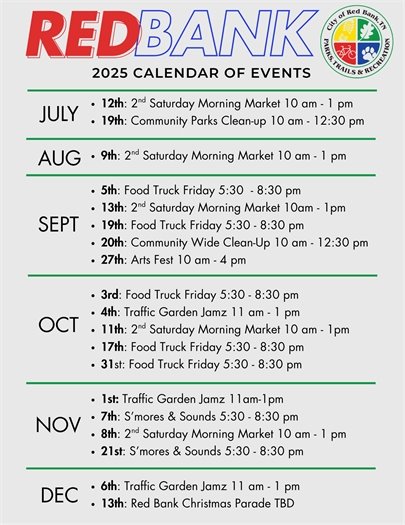
Looking Ahead
August 5th - Regular Commission Work Session - 5 PM Regular Commission Meeting - 6 PM
August 13th - Planning Commission Work Session - 12 PM August 27th - Regular Planning Commission Meeting - 6 PM
|
|
|
|
|
|
|
|




 Share on Facebook
 Share on Twitter
 Share via Email
